
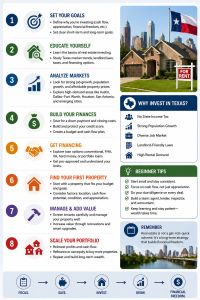
Getting into real estate can feel… a little overwhelming at first.
You hear terms like “portfolio,” “cash flow,” “scaling,” and suddenly it sounds like something only experienced investors understand.
But here’s the truth—everyone starts somewhere.
And building a real estate portfolio Texas investors rely on doesn’t require perfection. It just takes a clear plan, some patience, and a willingness to learn as you go.
So if you’re starting from scratch (or close to it), this guide will walk you through the process step-by-step… in a way that actually makes sense.
What Does a Real Estate Portfolio Really Mean?
Let’s simplify it.
A Real Estate Portfolio Is:
A collection of properties you own for investment purposes.
That could include:
- Rental homes
- Land investments
- Multi-family properties
- Commercial real estate
It’s not about having dozens of properties overnight—it’s about building over time.
That’s the foundation of long-term real estate investing.
Why Texas Is a Strong Place to Start
Texas has been a go-to for investors for a while now.
Why?
- Population growth
- Strong job markets
- No state income tax
- High rental demand
These factors make it appealing for beginners looking to start a building property portfolio strategy.
Step 1: Get Clear on Your Investment Goal
Before you buy anything… pause.
Ask Yourself:
- Do I want monthly cash flow?
- Am I focused on long-term appreciation?
- Do I want to flip or hold properties?
Your goal shapes everything that comes next.
Step 2: Understand Your Budget (Honestly)
This part matters more than people expect.
Look At:
- Savings
- Credit score
- Financing options
You don’t need a huge amount of money to start—but you do need a clear picture of what you can handle.
Step 3: Learn the Basics of Property Types
Not all investments are the same.
Common Options:
- Single-family homes
- Duplexes or multi-family units
- Raw land
Each has pros and cons depending on your strategy.
Step 4: Start Small (Seriously)
This is where a lot of beginners get tripped up.
They try to go too big too fast.
Better Approach:
Start with one solid investment.
Learn from it.
Then grow.
That’s how real estate investing Texas beginners build confidence.
Step 5: Find the Right Location
Location isn’t just a buzzword—it’s everything.
Look For Areas With:
- Job growth
- Population increase
- Rental demand
Working with experts like Airstream Realty can help you identify areas that actually make sense for investment.
Step 6: Run the Numbers (Even If It Feels Boring)
This part… yeah, it’s not exciting.
But it’s critical.
Calculate:
- Purchase price
- Monthly expenses
- Rental income potential
If the numbers don’t work, the deal doesn’t work.
Step 7: Secure Financing
You’ve got options here.
Common Financing Routes:
- Traditional loans
- FHA loans (for owner-occupied properties)
- Investment property loans
Talk to lenders early so you know what you qualify for.
Step 8: Look for Deals (Not Just Listings)
The best deals aren’t always obvious.
Consider:
- Off-market opportunities
- Distressed properties
- Undervalued areas
Exploring options like off-market land opportunities can open doors most buyers don’t even see.
Step 9: Make Your First Purchase
This is the big step.
And yeah… it might feel a little nerve-wracking.
But remember:
You’ve done the research. You’ve run the numbers.
You’re not guessing.
Step 10: Set Up Your Property for Success
Once you own it, the real work begins.
Focus On:
- Maintenance
- Tenant quality
- Consistent income
This is where your rental property strategy Texas starts to take shape.
Step 11: Learn From Your First Deal
Your first property teaches you more than anything else.
Pay Attention To:
- What worked
- What didn’t
- What you’d do differently
This is how you get better.
Step 12: Scale Slowly and Strategically
Now you’re thinking about the next property.
Key Idea:
Don’t rush.
Scaling is about:
- Reinvesting profits
- Managing risk
- Growing sustainably
That’s the heart of scaling real estate investments.
Step 13: Diversify Over Time
As your portfolio grows, diversify.
You Might Add:
- Different property types
- New locations
- Land investments
For example, working with specialists in areas like land brokerage in Ennis, TX can help expand your options.
Step 14: Stay Consistent (This Part Matters Most)
Real estate isn’t a quick win.
It’s About:
- Consistency
- Patience
- Smart decisions over time
That’s how real portfolios are built.
Common Mistakes Beginners Make
Let’s keep this honest.
Trying to Do Too Much Too Fast
Leads to stress—and bad decisions.
Ignoring the Numbers
Emotion doesn’t make a deal good.
Skipping Research
Location and demand matter more than anything.
Not Planning for Expenses
Maintenance and vacancies happen.
A Simple Strategy That Works
You don’t need a complicated plan.
Just Focus On:
- One good property
- Strong fundamentals
- Gradual growth
That’s it.
FAQs: Building a Real Estate Portfolio in Texas
How much money do I need to start?
It depends, but many investors start with 10–20% down.
What’s the best property type for beginners?
Single-family homes are often the easiest to manage.
How long does it take to build a portfolio?
It varies—but most portfolios grow over years, not months.
Should I invest in land or rentals?
Both can work—depends on your strategy.
Is Texas a good market for beginners?
Yes, due to growth and strong rental demand.
What’s the biggest mistake to avoid?
Rushing into deals without proper analysis.
Final Thoughts
Building a real estate portfolio in Texas doesn’t require a perfect plan.
It just requires a starting point.
One property. One decision. One step forward.
And from there… it builds.
Slowly at first. Then faster as you learn.
So if you’ve been thinking about getting started, maybe this is your sign to stop overthinking it—and just take that first step.