Author name: Alberto Racho

preparing for investment property Texas
Blog

How to Prepare Financially Before Buying Investment Property in Texas

A lot of people think the hard part of real estate investing is finding the right property. And sure, that matters. But the buyers who run into trouble most consistently aren’t the ones who picked the wrong house or the wrong piece of land. They’re the ones who got to closing — or just past it — without having their financial house in order first. Investment property is fundamentally different from buying a primary residence. The lending standards are stricter. The costs are higher. The carrying expenses are real. And the things that can go wrong — a vacancy, a major repair, a market shift — come out of your pocket in ways that a homeowner’s situation often doesn’t replicate. Texas is one of the best states in the country for real estate investing, but that opportunity is best captured by buyers who show up prepared rather than enthusiastic. Here’s what financial preparation actually looks like before you start making offers. Know Your Numbers Before You Start Searching The first mistake a lot of first-time investment property buyers make is starting with the search and working backward to the financing. It feels backwards to talk money before you’ve even found something you want, but lenders and experienced investors both know it’s the right sequence. Before you look at a single listing, you need a clear picture of four things: your credit score and report, your current debt-to-income ratio, your available liquid capital for down payment and reserves, and your realistic borrowing capacity for an investment property specifically — not for a primary residence, which is a different and easier standard. Pull your credit reports from all three bureaus. Investment property loans typically require a minimum credit score of 680 to 700 at most conventional lenders, with better rates available at 740 and above. If you’re currently at 665, spending three to six months improving your score before buying is worth doing — the rate difference between 665 and 720 on an investment property loan is meaningful money over a thirty-year term. Your debt-to-income ratio is the other lever most buyers underestimate. Lenders look at your total monthly debt obligations — including the proposed new mortgage payment — relative to your gross monthly income. Investment property purchases are underwritten more conservatively than primary residences, and if your current debts are already consuming a significant portion of your income, adding a new investment mortgage may not qualify at all, or may qualify for less than you expect. Investment Property Financing: How It Actually Works Financing investment property in Texas isn’t dramatically different from other states, but the terms are consistently less favorable than primary residence financing — which surprises buyers who’ve only bought homes to live in. Conventional investment property loans typically require 15% to 25% down depending on property type, number of units, and lender. That’s substantially more than the 3% to 5% down that primary residence buyers often use. For a $350,000 investment property, you’re looking at $52,500 to $87,500 down before closing costs. For commercial or land purchases, the requirements can be more demanding still — 25% to 40% down is common for commercial investment property financing. Interest rates on investment property loans run roughly 0.5% to 0.75% higher than equivalent primary residence rates. That gap widens during periods of credit tightening. Factor that into your cash-on-cash return calculations — it matters more than most first-time investors account for. There are alternative financing structures worth knowing about as well. Portfolio loans from community banks and credit unions aren’t sold on the secondary market and can have more flexible underwriting than conventional products. DSCR loans — debt service coverage ratio loans — qualify borrowers based on the property’s rental income rather than personal income, which works well for investors with complex income situations. Hard money and bridge financing serve specific short-term purposes but carry high costs and should be used deliberately rather than as a default when conventional financing doesn’t work. For buyers evaluating land or larger acreage investments specifically, the financing structures are meaningfully different from residential income property. Land purchases in Texas often involve different lender pools — agricultural banks, Farm Credit System lenders, and land-specific portfolio lenders — with their own underwriting criteria and down payment requirements worth understanding before you start making offers. The Down Payment Is Only the Beginning One of the most common financial mistakes among new investment property buyers is treating the down payment as the finish line for capital requirements. It’s not even close. Closing costs on investment property typically run 2% to 5% of the purchase price — and unlike primary residence purchases, there’s less seller concession culture in investment transactions. Budget for those costs coming out of pocket. On a $400,000 property, that’s $8,000 to $20,000 on top of your down payment. Then there’s the immediate post-closing period. Most investment properties require some level of work after acquisition — repairs, updates, tenant improvements, or in the case of land, improvements needed to make it productive or marketable. Even a property in excellent condition typically needs something. Budget 2% to 3% of purchase price for immediate capital expenditures and hope you don’t use all of it. For commercial and mixed-use investments, tenant improvement allowances, lease-up periods without rental income, and deferred maintenance can require substantial capital beyond the acquisition cost. Commercial property investment in Texas often requires a more thorough pre-purchase capital planning process than residential investment — the returns can be better, but the capital requirements are typically more complex. Cash Reserves: The Number Most Investors Get Wrong Cash reserves are the financial cushion that protects an investment from becoming a crisis when something goes wrong. And in real estate investing, something always eventually goes wrong. A roof. An HVAC. A tenant who doesn’t pay for two months. A vacancy that stretches longer than projected. These are normal events in property ownership — they’re only emergencies if you don’t have reserves to handle them. How much is enough? The

commercial development property criteria
Blog

What Makes a Property Attractive to Commercial Developers?

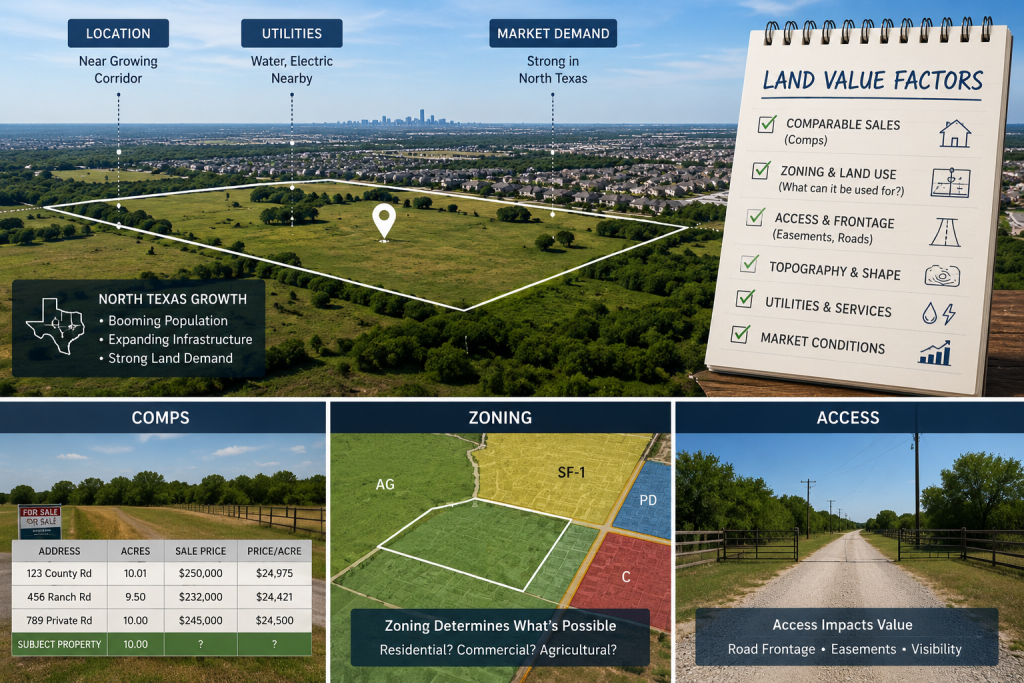
Most landowners think about their property from the inside out — what it means to them, what they’ve done with it, what it’s worth based on what they paid. Commercial developers think about land completely differently. They’re running a different calculation entirely, and understanding that calculation is genuinely useful whether you’re a landowner wondering what your acreage might be worth to a developer, an investor trying to identify land with commercial upside, or a buyer trying to understand what makes certain properties trade at significant premiums. The short version is this: developers aren’t buying land, they’re buying feasibility. They want sites where the math works — where the combination of location, infrastructure, entitlements, physical characteristics, and market demand lines up well enough to justify the capital, time, and risk that commercial development requires. Every factor on that list is a potential deal-maker or deal-breaker. Here’s what actually goes into that calculation. Location and Traffic: The Foundation of Commercial Site Selection Location in commercial real estate isn’t just about being in a good city or a growing county — it’s about specific position within a market. Two parcels five miles apart can have dramatically different commercial development potential based on where exactly they sit relative to traffic, rooftops, and competing uses. Traffic counts are one of the first things a commercial developer looks at. Average daily traffic on an adjacent highway or arterial road is a direct proxy for customer visibility and accessibility, which is the foundation of most retail and hospitality uses. A parcel on a corridor carrying 30,000 vehicles per day attracts a completely different developer profile than an identical parcel on a road carrying 5,000. Equally important is the surrounding population density and demographics. Developers doing commercial site selection in Texas run detailed analyses of household incomes, age distributions, and spending patterns within one, three, and five-mile radii of a potential site. A site with the right traffic count but the wrong surrounding demographics for a particular use still doesn’t work. Both have to align. Visibility matters too — something that doesn’t always show up in data but gets assessed on every site visit. Can the site be seen from the road? Is there signage potential? Does the topography create a natural visual advantage or a disadvantage? These questions shape what a developer can build and how it will perform once open. Access and Frontage: More Technical Than It Sounds Direct highway or major arterial frontage is one of the most consistently valued features in commercial land. Developers — especially those building retail, fast food, convenience, or hospitality uses — want customers to be able to get in and out easily, and they want the site to read clearly from the road at highway speed. But frontage alone isn’t enough. The specific access points available on a site matter enormously. Can the site get a full-movement access (left turn in, left turn out) from the adjacent road? Is a traffic signal possible or already present? Are there median cuts that allow U-turn access for traffic traveling in both directions? These details, which might sound minor to a landowner, significantly affect a site’s appeal to commercial users and directly impact what can be built and how it will perform. Developers also evaluate the overall circulation pattern around a site — how traffic flows from the highway to the site, through the site, and back out. Awkward access configurations create real operational problems and can push certain users away entirely. A site with excellent location but poor access geometry will trade at a discount compared to a comparable site with clean in-and-out access. The 394± acre parcel at the northwest corner of Hwy 20 and 155 in Tyler, TX is an example of a large-scale site where highway intersection positioning — one of the strongest commercial access configurations available — is a primary component of the property’s developer appeal. Utilities: The Infrastructure That Makes or Breaks a Deal Commercial development without utilities isn’t really commercial development — it’s an expensive engineering problem. Water, sewer, electricity, and natural gas availability near or at a site can be the single factor that separates a developable site from land that sits for years waiting on infrastructure. Water and sewer are typically the highest-stakes utility questions for commercial sites. Municipal water and sewer service means a developer can size their project for the market without worrying about well capacity or septic system limitations. Land outside utility service areas — or with only partial utility access — either requires significant infrastructure investment or caps what can be built there. Both scenarios reduce what a developer is willing to pay. Electrical capacity matters for industrial and warehouse users in particular. A site near a major substation with available capacity is substantially more attractive to industrial developers than a site requiring miles of new transmission infrastructure. Fiber and telecommunications infrastructure is increasingly a factor as well, particularly for office, medical, and data-intensive commercial uses. Smart landowners near growing Texas communities periodically check on utility extension plans in their area. Knowing that a water line is being extended along a corridor in the next two to three years — before the developer community has fully recognized it — can identify acquisition timing and negotiation context that others miss. Zoning, Entitlements, and the Cost of Uncertainty Entitlement risk is real money to a commercial developer. The process of getting a piece of land rezoned, permitted, and approved for a specific commercial use takes time, costs money, and carries the possibility of denial. Every dollar and month spent navigating that process is factored into what a developer will offer for a piece of land. Land that already carries commercial or mixed-use zoning trades at a meaningful premium over agricultural or residential-zoned land with commercial potential. A parcel zoned for commercial use eliminates one of the most common development obstacles and shortens the path from site control to construction start. Beyond base zoning, developers look at what the entitlement pathway

highway expansion property values Texas
Blog

How Highway Expansion Projects Influence Property Values in Texas

There’s an old real estate maxim that’s stood up pretty well over time: transportation infrastructure is the skeleton that everything else grows around. Roads don’t just move people from point A to point B — they determine which pieces of land become valuable, which corridors attract development, and which rural parcels quietly sit at the edge of the next growth wave. In Texas, this plays out at a scale that’s hard to match anywhere else in the country. TxDOT manages one of the largest state highway systems in the world, and the pace of road expansion, widening, and new construction in Texas reflects a state that is genuinely trying to keep up with explosive population growth. For property owners, land investors, and buyers paying attention, highway projects aren’t just traffic news — they’re a leading indicator of where value is heading. Here’s how it works, why it matters, and what smart buyers are actually watching. The Mechanics: Why Roads Create Property Value The connection between transportation and land value isn’t complicated at its core. Accessibility drives demand. When a piece of land becomes easier to reach — when commute times drop, when truck routes become more direct, when a formerly remote area gets connected to a major highway — its potential uses expand. And expanded use potential translates directly into higher value. Before a new highway or interchange is built, land near the planned route often trades at rural or agricultural values. After construction, the same parcels may have direct access to high-traffic corridors and become viable for commercial development, residential subdivision, or industrial use. That transition in use potential is what drives appreciation, and it rarely happens all at once. The appreciation typically comes in phases. The first phase happens when the project is announced or enters the environmental review process — informed buyers and land investors start accumulating positions in the path of the project. The second phase comes as construction begins and certainty increases. The third — often the most dramatic for surrounding properties — happens as development follows the completed infrastructure and the land use transition accelerates. Buyers who get in during phase one capture the best upside. Those who wait until phase three are paying for appreciation that’s already happened. Texas Highway Expansion: The Scale of What’s Happening Texas has invested heavily in its transportation network for decades, and the pace hasn’t slowed. SH 130, Loop 49 in Tyler, the expansion of SH 183 in the DFW Metroplex, ongoing widening along US-290, and dozens of smaller projects across rural and suburban Texas are all working through the pipeline at any given time. The Unified Transportation Program — TxDOT’s ten-year planning document — is publicly available and details billions in committed and planned highway spending by district and project. For land buyers and investors, that document is genuinely useful. It identifies which corridors are receiving funding, where interchange improvements are planned, and which rural highways are slated for capacity expansion. Cross-referencing UTP project data with current land prices in those corridors is exactly the kind of research that separates informed land investment from guesswork. East Texas, in particular, has seen meaningful highway investment in recent years. Loop 49 around Tyler has transformed land value patterns in Smith County. The ongoing expansion of US-59 and its eventual upgrade to Interstate 69 status has been reshaping East Texas land markets for years, with commercial and residential development following the improved corridor southward from the DFW area through Lufkin and beyond. For buyers interested in East Texas land near growing transportation corridors, a property like the 30± acre parcel in Lufkin, TX illustrates the kind of acreage positioned near active infrastructure corridors — a useful reference point for understanding how land near improved highways is currently priced and positioned in this part of the state. Commercial Real Estate: The Direct Beneficiary If there’s a single property type that benefits most directly and most predictably from highway expansion, it’s commercial real estate near new or improved interchanges. The logic is straightforward: retail, fuel stations, restaurants, hotels, logistics facilities, and light industrial users all need highway access, and they compete for the limited commercial land near interchanges once a project is complete. The appreciation on commercial corridor land near newly completed Texas highway projects has been well documented across multiple regions. Land along SH 130 near Austin that traded at agricultural prices before construction was completed has seen dramatic value increases as the corridor developed. Similar patterns have played out along the Grand Parkway segments around Houston, where each newly completed segment has triggered a wave of commercial and residential development in previously rural areas. For investors specifically evaluating commercial land in Texas growth corridors, commercial property opportunities in Texas that sit near planned or recently completed highway projects represent one of the more time-tested entry strategies in the state’s real estate market. Agricultural Land in the Path of Progress Rural and agricultural landowners near planned highway corridors occupy an interesting position. The land they hold today may be valued for its agricultural productivity — what it produces in hay, cattle, row crops, or timber. But its longer-term value may be driven primarily by its proximity to infrastructure and the development potential that infrastructure unlocks. This dynamic creates a dual-value proposition. The land earns its keep agriculturally while you hold it, and its appreciation trajectory is tied to the infrastructure investment happening around it. Farmers and ranchers who owned land near what became the SH 130 corridor or the Grand Parkway segments made exceptional returns not because they were real estate investors but because they happened to hold land in the right place when TxDOT built through the region. You don’t have to get lucky that way. Paying attention to where highway investment is going — and buying agricultural land with good highway access in those corridors before the projects are complete — is a replicable strategy with a long track record in Texas. Agricultural land in Texas growth corridors

buying rural land Texas
Blog

What Smart Buyers Look for Before Purchasing Rural Land in Texas

Buying rural land in Texas is one of those decisions that can go really well or really sideways — and the difference is almost always what happened before the contract was signed. The buyers who end up happy with their acreage are the ones who asked the right questions early. The ones who have regrets? Usually they got excited about the view and the price per acre and skipped the boring parts. The boring parts matter a lot. Texas is a big state with wildly different terrain, geology, water conditions, legal traditions, and land use patterns depending on where you are. What you need to verify before buying 50 acres in East Texas is genuinely different from what matters most on a Hill Country ranch or a South Plains farm. This guide covers the foundational due diligence that applies across the state, plus the specifics that catch buyers off guard most often. Start With What You Actually Want the Land to Do Before you start evaluating any specific property, you need a clear answer to a deceptively simple question: what is this land for? Recreational use — hunting, fishing, weekend getaways — has different requirements than agricultural production, which has different requirements than a buy-and-hold investment in a growth corridor, which is different again from residential development potential. The checklist items that matter most shift depending on your intended use. A hunting property buyer cares deeply about wildlife habitat, water features, and timber cover. A row crop farmer is evaluating soil quality, drainage, and water access. A land investor is looking at proximity to growth, infrastructure trajectory, and comparable sales velocity. Getting clear on your purpose first means your due diligence is focused rather than scattered. If you’re still figuring out what type of property fits your goals, browsing available Texas land listings across different regions and use types gives you a useful real-world picture of what’s out there and what different categories of land are actually trading for right now. Water: The Single Most Important Factor in Texas Land Ask any experienced Texas land buyer or broker what they check first, and water comes up every time. It’s not close. In a state where drought is a recurring reality and groundwater law is genuinely complex, understanding a property’s water situation before you buy is non-negotiable. Surface Water vs. Groundwater Texas separates surface water rights from groundwater rights, and both require separate investigation. Surface water — rivers, streams, ponds, lakes — is generally owned by the state of Texas, and landowners typically have usage rights that can vary by region and water district. Groundwater, on the other hand, falls under the “rule of capture” in Texas, meaning the landowner generally has the right to pump what’s beneath their property, subject to applicable groundwater conservation district rules. If the property has a stock tank, a creek, or a river running through it, verify what rights come with the land versus what the seller actually owns. Surface water features can be beautiful and useful, but assuming you have unlimited access to a creek that runs along your boundary line is an assumption that’s caused a lot of expensive arguments. Well Water Depth and Reliability For properties without municipal water service — which is most rural Texas acreage — well quality is critical. Find out the depth of any existing well, the gallons-per-minute yield, water quality test results, and when the well was last tested or serviced. If there’s no existing well, get an estimate from a local driller on what depth typically produces in that area and what it would cost. In some parts of West Texas, drilling a productive well is a significant expense that should factor into your offer. Mineral Rights: Don’t Skip This Conversation Texas has a long history of separating surface rights from mineral rights, and a surprising number of buyers close on rural acreage without fully understanding what’s happening below the surface. Mineral rights — oil, gas, coal, uranium — can be severed from surface ownership and retained by a previous owner or sold separately. It’s entirely possible to buy land in Texas and own the surface completely while a third party owns everything beneath it. This matters for a few reasons. First, if minerals are leased, an operator can have the legal right to access your surface to conduct drilling or extraction operations, with your ability to object being limited. Second, retaining mineral rights has real value in producing areas, so buying land with full mineral ownership is generally worth more than buying the surface alone. Third, even in areas without active production, the title history of mineral ownership can affect future value and financing. Pull a mineral ownership report. Understand what fraction of the minerals, if any, convey with the property. And in active oil and gas counties — Permian Basin, Eagle Ford, etc. — treat this with the same seriousness as the surface title review. Access, Roads, and Easements Landlocked parcels exist in Texas. More than most people realize, actually. Before falling in love with a property, confirm that it has legal access to a public road — not just a handshake agreement with a neighbor, and not just a path that happens to cross someone else’s property. Legal access via a recorded easement or direct frontage on a county or state road is what you need. Beyond access, review all recorded easements on the property. Pipeline easements are extremely common on rural Texas land, and while they don’t necessarily reduce a property’s value significantly, you need to understand what the easement holder’s rights are, what restrictions exist on land use within the easement corridor, and whether any pipelines are active. Power line easements, water line easements, and road easements all carry their own sets of rights and restrictions that affect how you can use the land. Get a title commitment early in the process and read the Schedule B exceptions carefully. That’s where the easements, restrictions, and title encumbrances show up —

population growth North Texas real estate
Blog

How Population Growth Is Reshaping Real Estate Demand in North Texas

How Population Growth Is Reshaping Real Estate Demand in North Texas Texas has been growing for a long time. But what’s happening in North Texas right now isn’t just growth — it’s a full-scale reshaping of where people live, where they work, and what kind of real estate they’re chasing. The numbers are hard to ignore. The Dallas-Fort Worth metroplex added more residents over the past decade than almost any other metro in the country, and the ripple effects are spreading further out than most people anticipated even five years ago. For real estate buyers, investors, and landowners, this isn’t background noise. It’s the story that explains almost everything happening with housing demand, land values, and development pressure across the region. Understanding the forces behind it — and where they’re headed — is genuinely useful whether you’re looking to buy, sell, hold, or build. The Migration Story Behind the Numbers Texas migration trends have been well-documented, but it’s worth grounding the conversation in what’s actually driving people here. California, Illinois, and New York have all been consistent net-exporters of population to Texas for the better part of the last fifteen years. The reasons are layered — no state income tax, lower cost of living relative to coastal metros, a business environment that’s attracted major corporate relocations, and a housing market that, even with recent appreciation, still offers more square footage per dollar than most of the country. The pandemic accelerated all of it. Remote work untethered a lot of high earners from expensive coastal cities and gave them the freedom to move somewhere that made financial sense. Texas was a primary beneficiary of that shift, and the DFW area absorbed an enormous chunk of it. But here’s the part that matters for real estate specifically: people didn’t all pour into Dallas proper. They spread out. They went to Frisco, Prosper, Celina, Forney, Midlothian. They went places that were semi-rural a decade ago and are now full-blown suburbs with master-planned communities and six-month construction backlogs. That outward spread is the defining characteristic of North Texas real estate demand right now. Ellis County: A Case Study in Suburban Expansion Texas-Style If you want a single county that illustrates what’s happening in North Texas real estate, Ellis County is the one to watch. Sitting directly south of Dallas County, with Waxahachie as its seat, Ellis County has been experiencing the kind of population growth that transforms a place in real time. Midlothian has gone from a quiet industrial town to a rapidly growing suburb with new residential development on virtually every major corridor. Waxahachie itself has seen consistent home value appreciation alongside population growth, as buyers priced out of closer-in suburbs discover that Ellis County offers newer homes on larger lots at price points that still make sense. And the infrastructure is following — road expansions, new schools, commercial development along Highway 287 that would have seemed wildly optimistic ten years ago. Ellis County population growth is being watched closely by developers and land investors for good reason. The land that sits between existing communities — raw acreage, agricultural parcels, transitional properties on the urban fringe — is exactly what’s next in line for development pressure. The people who understood that dynamic early in Collin County or Denton County did extremely well. Ellis County is where that same dynamic is still in relatively early stages. For anyone interested in the land side of this equation, exploring available land listings in Texas growth corridors is a practical starting point for understanding what’s available and what comparable properties are trading for in areas like this. The Corridors Driving Housing Demand in North Texas Not all of North Texas is growing at the same rate or in the same direction. There are specific corridors where population pressure and infrastructure investment are combining to create some of the most active real estate demand in the state. The US-380 Corridor Highway 380 running east-west through Denton, Collin, and Rockwall counties has become one of the most closely watched development corridors in the region. Cities like Celina, Prosper, and Princeton sit along or near this corridor and have been posting some of the highest percentage growth rates of any municipalities in Texas. The combination of relatively affordable land (compared to areas further south), good highway access, and proximity to major employment centers has made this stretch a magnet for master-planned development. The I-35E Southward Expansion South of Dallas along I-35E, the growth story runs through Ellis and Hill counties. This corridor is seeing both residential development for commuters willing to trade distance for affordability, and industrial and logistics development that’s following the population rather than leading it. Warehouse, distribution, and light manufacturing are all expanding south of the DFW core, and those employment centers are generating demand for workforce housing in the same areas. East DFW: Rockwall, Kaufman, and Beyond East of Dallas, the Lake Ray Hubbard corridor and communities like Rockwall, Forney, and Terrell are absorbing significant residential demand. Rockwall County has been one of the fastest-growing counties in Texas for several years running. The appeal is straightforward — lakeside quality of life, manageable commute to Dallas employment centers, and home prices that still undercut comparably sized properties in Plano or Frisco by a meaningful margin. For buyers or investors considering the residential side of this demand, residential property listings in North Texas growth areas offer a real-time picture of what’s available across these corridors and what the current market looks like for buyers at different price points. What This Means for Land Values and Agricultural Property Population growth in suburban Texas doesn’t stay suburban. It pushes into formerly rural land and transforms it — sometimes quickly, sometimes over a decade or more, but the direction is consistent. Agricultural land in the growth path of North Texas suburbs has become one of the more discussed asset classes in Texas real estate, and for good reason. Farmland and ranch land within roughly 45 to 60 miles of the

cost of owning a home Texas
Blog

The True Cost of Owning a Home in Texas (Beyond the Mortgage)

Buying a home feels like the big milestone. You finally get the keys, maybe take that first walk through your space, and think—this is it. But here’s the part that doesn’t always get talked about enough… The mortgage is just the beginning. If you’re planning to buy (or already own) in Texas, understanding the full cost of owning a home Texas style is what keeps you from getting blindsided later. And no, it’s not about scaring you off. It’s about helping you plan smarter. Let’s break it down in a way that actually feels real—not overly technical, just practical. The Mortgage: Just One Piece of the Puzzle Most people focus here first. Your Monthly Mortgage Includes: Principal Interest That’s the obvious part. But what gets missed is everything layered on top of it. Property Taxes in Texas (Yeah… They Add Up) Texas doesn’t have a state income tax. Sounds great, right? The Trade-Off: Property taxes tend to be higher than the national average. What That Means for You: Monthly payments can be higher than expected Taxes can increase over time This is one of the biggest property ownership expenses in the state. Homeowners Insurance: Required (and Necessary) If you have a mortgage, you’ll need insurance. It Covers: Damage from storms Fire Certain types of liability In Texas, weather plays a role—so coverage matters more than people sometimes expect. Maintenance Costs: The Ongoing Reality This is where things get real. Homes need upkeep. Always. Typical maintenance costs Texas homes owners deal with: HVAC servicing Roof repairs Plumbing fixes Appliance replacement A Simple Rule: Set aside about 1–3% of your home’s value per year for maintenance. It’s not exact—but it’s a solid starting point. Utilities: More Than You Might Expect Utility costs vary depending on your home, but in Texas… You’ll Likely Pay For: Electricity (big one, especially in summer) Water Trash services Internet Hot weather means AC runs a lot. So yeah… utilities Texas housing costs can sneak up on you if you’re not prepared. HOA Fees (If Applicable) Not every home has these—but many do. HOA Fees May Cover: Landscaping Community maintenance Amenities Monthly Cost: Can range from minimal to several hundred dollars. Always check this before buying. Repairs vs Maintenance (They’re Not the Same) People often lump these together. Maintenance = Expected Filter changes Routine servicing Repairs = Unexpected Broken water heater Electrical issues Roof damage Both need to be part of your budgeting for homeownership. Home Improvements (Optional… But Not Really) At some point, you’ll want to upgrade something. Common Upgrades: Flooring Kitchen updates Outdoor spaces These aren’t required—but most homeowners end up doing them over time. Property Insurance Add-Ons (Depending on Location) Some homes need extra coverage. Examples: Flood insurance Windstorm insurance Not always required—but sometimes necessary. Closing Costs (Before You Even Move In) Let’s rewind for a second. Before you own the home, there are upfront costs. Closing Costs Can Include: Loan fees Title insurance Inspections Usually around 2–5% of the purchase price. The Cost of Time (Something People Forget) Owning a home takes time. You’ll Spend Time On: Maintenance Repairs Managing bills It’s not just financial—it’s part of your lifestyle. Unexpected Costs (Because They Happen) No matter how prepared you are… Something unexpected will come up. Examples: Emergency repairs Storm damage Sudden appliance failure This is why having a buffer matters. How to Budget for Homeownership (Realistically) Let’s make this practical. A Simple Monthly Breakdown Might Include: Mortgage Taxes Insurance Utilities Maintenance savings If you plan for all five, you’re in a much better position. Why Working With the Right Team Matters Understanding costs upfront is easier when you have guidance. Working with experienced professionals like Airstream Realty can help you see the full picture—not just the listing price. Considering Different Property Types Not all properties come with the same costs. For Example: Commercial properties may have different expenses Land ownership has fewer utilities but other considerations Exploring options like commercial property investments can open up different financial paths. Location Still Affects Cost Even within Texas, costs vary. Factors Include: Local tax rates Utility costs Maintenance needs Areas like Midlothian land investments may offer different cost structures compared to urban markets. The Long-Term View Here’s the bigger picture. Owning a home isn’t just about monthly payments—it’s about long-term value. Over Time: Property can appreciate Equity builds Costs become more predictable That’s the trade-off. Common Mistakes New Homeowners Make Let’s keep this honest. Underestimating Maintenance It’s not optional. Ignoring Property Taxes They can increase over time. Not Having an Emergency Fund This one matters more than people expect. Focusing Only on the Mortgage It’s just one part of the total cost. A Simple Way to Think About It Instead of asking: “What’s my mortgage?” Ask: “What’s my total monthly cost of ownership?” That shift changes everything. FAQs: Cost of Owning a Home in Texas What is the biggest hidden cost of homeownership? Maintenance and property taxes are often underestimated. How much should I budget for maintenance? About 1–3% of your home’s value annually. Are utilities expensive in Texas? They can be, especially electricity during summer months. Do property taxes increase over time? Yes, depending on local assessments and market changes. What’s included in closing costs? Loan fees, title services, inspections, and more. Is owning a home still worth it? For many people, yes—but only with proper planning. Final Thoughts Owning a home in Texas comes with more than just a mortgage. It’s taxes, maintenance, utilities, and the occasional surprise expense. But it’s also stability. Ownership. Long-term value. If you go into it with clear expectations—and a solid plan—you’re not just buying a house. You’re building something that grows over time. And honestly… that’s where the real value is.

real estate portfolio Texas
Blog

How to Build a Real Estate Portfolio in Texas (Step-by-Step for Beginners)

  Getting into real estate can feel… a little overwhelming at first. You hear terms like “portfolio,” “cash flow,” “scaling,” and suddenly it sounds like something only experienced investors understand. But here’s the truth—everyone starts somewhere. And building a real estate portfolio Texas investors rely on doesn’t require perfection. It just takes a clear plan, some patience, and a willingness to learn as you go. So if you’re starting from scratch (or close to it), this guide will walk you through the process step-by-step… in a way that actually makes sense. What Does a Real Estate Portfolio Really Mean? Let’s simplify it. A Real Estate Portfolio Is: A collection of properties you own for investment purposes. That could include: Rental homes Land investments Multi-family properties Commercial real estate It’s not about having dozens of properties overnight—it’s about building over time. That’s the foundation of long-term real estate investing. Why Texas Is a Strong Place to Start Texas has been a go-to for investors for a while now. Why? Population growth Strong job markets No state income tax High rental demand These factors make it appealing for beginners looking to start a building property portfolio strategy. Step 1: Get Clear on Your Investment Goal Before you buy anything… pause. Ask Yourself: Do I want monthly cash flow? Am I focused on long-term appreciation? Do I want to flip or hold properties? Your goal shapes everything that comes next. Step 2: Understand Your Budget (Honestly) This part matters more than people expect. Look At: Savings Credit score Financing options You don’t need a huge amount of money to start—but you do need a clear picture of what you can handle. Step 3: Learn the Basics of Property Types Not all investments are the same. Common Options: Single-family homes Duplexes or multi-family units Raw land Each has pros and cons depending on your strategy. Step 4: Start Small (Seriously) This is where a lot of beginners get tripped up. They try to go too big too fast. Better Approach: Start with one solid investment. Learn from it. Then grow. That’s how real estate investing Texas beginners build confidence. Step 5: Find the Right Location Location isn’t just a buzzword—it’s everything. Look For Areas With: Job growth Population increase Rental demand Working with experts like Airstream Realty can help you identify areas that actually make sense for investment. Step 6: Run the Numbers (Even If It Feels Boring) This part… yeah, it’s not exciting. But it’s critical. Calculate: Purchase price Monthly expenses Rental income potential If the numbers don’t work, the deal doesn’t work. Step 7: Secure Financing You’ve got options here. Common Financing Routes: Traditional loans FHA loans (for owner-occupied properties) Investment property loans Talk to lenders early so you know what you qualify for. Step 8: Look for Deals (Not Just Listings) The best deals aren’t always obvious. Consider: Off-market opportunities Distressed properties Undervalued areas Exploring options like off-market land opportunities can open doors most buyers don’t even see. Step 9: Make Your First Purchase This is the big step. And yeah… it might feel a little nerve-wracking. But remember: You’ve done the research. You’ve run the numbers. You’re not guessing. Step 10: Set Up Your Property for Success Once you own it, the real work begins. Focus On: Maintenance Tenant quality Consistent income This is where your rental property strategy Texas starts to take shape. Step 11: Learn From Your First Deal Your first property teaches you more than anything else. Pay Attention To: What worked What didn’t What you’d do differently This is how you get better. Step 12: Scale Slowly and Strategically Now you’re thinking about the next property. Key Idea: Don’t rush. Scaling is about: Reinvesting profits Managing risk Growing sustainably That’s the heart of scaling real estate investments. Step 13: Diversify Over Time As your portfolio grows, diversify. You Might Add: Different property types New locations Land investments For example, working with specialists in areas like land brokerage in Ennis, TX can help expand your options. Step 14: Stay Consistent (This Part Matters Most) Real estate isn’t a quick win. It’s About: Consistency Patience Smart decisions over time That’s how real portfolios are built. Common Mistakes Beginners Make Let’s keep this honest. Trying to Do Too Much Too Fast Leads to stress—and bad decisions. Ignoring the Numbers Emotion doesn’t make a deal good. Skipping Research Location and demand matter more than anything. Not Planning for Expenses Maintenance and vacancies happen. A Simple Strategy That Works You don’t need a complicated plan. Just Focus On: One good property Strong fundamentals Gradual growth That’s it. FAQs: Building a Real Estate Portfolio in Texas How much money do I need to start? It depends, but many investors start with 10–20% down. What’s the best property type for beginners? Single-family homes are often the easiest to manage. How long does it take to build a portfolio? It varies—but most portfolios grow over years, not months. Should I invest in land or rentals? Both can work—depends on your strategy. Is Texas a good market for beginners? Yes, due to growth and strong rental demand. What’s the biggest mistake to avoid? Rushing into deals without proper analysis. Final Thoughts Building a real estate portfolio in Texas doesn’t require a perfect plan. It just requires a starting point. One property. One decision. One step forward. And from there… it builds. Slowly at first. Then faster as you learn. So if you’ve been thinking about getting started, maybe this is your sign to stop overthinking it—and just take that first step.

high demand properties Texas
Blog

What Makes a Property “High Demand” in Texas? A Buyer’s Checklist

If you’ve been looking at real estate in Texas lately, you’ve probably noticed something… Some properties just move faster. They get multiple offers. They sell above asking. And sometimes, they’re gone before you even get a chance to schedule a showing. So what’s the difference? Why do certain homes—or land—become high demand properties Texas buyers compete over? It’s not luck. And it’s not always about price. There are specific factors that make a property stand out in a competitive market. Once you understand them, you start seeing deals differently. Let’s break it down in a way that actually makes sense—no fluff, just what matters. First, What Does “High Demand” Really Mean? A high-demand property isn’t just popular. It’s a property that checks enough boxes for enough buyers at the same time. Signs of a High-Demand Property: Sells quickly Attracts multiple offers Holds or increases value over time Has strong resale potential Understanding real estate demand factors helps you avoid chasing bad deals—and focus on smarter ones. Location Still Matters (But Not in the Obvious Way) You’ve heard it a thousand times: location, location, location. But let’s go deeper. It’s Not Just About the City It’s about: Proximity to highways Nearby growth and development Access to jobs School districts In Texas, areas expanding outward from major cities often create hidden opportunities. That’s where demand starts—before it becomes obvious. Growth Patterns: Follow the Expansion Here’s something experienced buyers pay attention to… Where is the growth going? Look For: New construction nearby Infrastructure projects Business developments These signals tell you where demand is heading—not just where it already is. That’s how you spot future Texas housing trends. Property Type: What Are People Actually Looking For? Demand isn’t one-size-fits-all. Different buyers want different things—but patterns do exist. High-Demand Property Types in Texas: Move-in ready homes Land with utilities access Properties near urban centers Flexible-use land (residential + recreational) If a property fits multiple buyer types, demand naturally increases. Condition: Move-In Ready Wins (Most of the Time) Let’s be real. Most buyers don’t want a project. Properties That Sell Faster: Updated interiors Minimal repairs needed Clean, well-maintained Even small improvements can make a big difference in what makes a home desirable. Price vs Value: They’re Not the Same A lower price doesn’t always mean high demand. Buyers Look For: Fair market pricing Perceived value Long-term potential A well-priced property that feels like a good deal will always attract more attention. Access and Usability Matter More Than You Think Especially when it comes to land. Key Factors: Road access Utility availability Build potential This is especially important if you’re exploring options like agricultural land in Texas, where usability directly impacts demand. The “Livability” Factor This one’s harder to measure—but easy to feel. Buyers Ask Themselves: Can I see myself here? Does this fit my lifestyle? Is it comfortable long-term? Properties that feel livable—not just functional—tend to move faster. Market Timing Plays a Role Even great properties can sit if timing is off. Peak Demand Times: Spring and early summer Periods of lower interest rates Strong local job markets Understanding timing helps you position yourself better in a competitive housing market. The Role of Scarcity If something is rare… people want it more. Examples: Large acreage near cities Unique property features Limited inventory areas Scarcity drives urgency—and urgency drives demand. Neighborhood and Surroundings People don’t just buy property—they buy the area around it. What Buyers Look For: Safety Clean surroundings Nearby amenities Even if the property itself is great, the surrounding environment matters. Future Resale Potential Smart buyers think ahead. Ask Yourself: Will this still be desirable in 5–10 years? Is the area improving or declining? This is where working with experienced professionals, likeAirstream Realty, can help you evaluate long-term value—not just current appeal. Buyer Checklist: Spotting High-Demand Properties Let’s simplify everything into a practical checklist. Use This Before You Buy: Is the location growing? Is the property usable and accessible? Does it match current buyer demand? Is the price aligned with value? Would I feel confident reselling it later? If you’re answering “yes” to most of these… you’re on the right track. Competitive Housing Market Tips When demand is high, strategy matters. Tips That Help: Get pre-approved Move quickly on good deals Don’t overanalyze every decision Waiting too long in a hot market usually means missing out. Land vs Homes: Demand Differences There’s a slight shift depending on what you’re buying. Homes: Focus on condition and location Land: Focus on access, utilities, and potential If you’re exploring areas like land opportunities in Denton, TX, these factors become even more important. Common Mistakes Buyers Make Let’s keep this honest. Focusing Only on Price Cheap doesn’t always mean good. Ignoring Growth Trends Where things are going matters more than where they are. Overlooking Usability If it’s hard to use, it’s hard to sell later. Waiting Too Long In a competitive market, hesitation can cost you. The Emotional Side of Demand It’s not just numbers. Buyers Often Decide Based On: First impressions Emotional connection Perceived lifestyle fit Properties that create that connection tend to move faster. Why Some Properties Sit on the Market Understanding this helps you avoid bad investments. Common Reasons: Overpriced Poor location Limited usability Outdated condition These are red flags to watch for. FAQs: High Demand Properties in Texas What makes a property high demand in Texas? Location, usability, pricing, and growth potential all play a role. Are high-demand properties always expensive? Not always—value matters more than price. How do I know if an area is growing? Look for new construction, infrastructure, and business development. Is land a good high-demand investment? Yes, especially if it has access, utilities, and flexibility. What’s the biggest mistake buyers make? Focusing only on price instead of long-term value. Should I act quickly in a competitive market? Yes—good properties don’t stay available for long. Final Thoughts High-demand properties aren’t random. They follow patterns—location, usability, growth, and value. Once you understand those patterns, you stop guessing and start making smarter decisions.

interest rates real estate Texas
Blog

How Interest Rates Impact Your Buying Power in the Texas Real Estate Market

Let’s say you’re ready to buy a home in Texas. You’ve been browsing listings, maybe saving a few favorites, getting a feel for prices… and then someone mentions interest rates. Suddenly everything feels a little less straightforward. Because here’s the thing—interest rates don’t just affect your monthly payment. They directly change how much home you can afford in the first place. And that’s where a lot of buyers get caught off guard. So let’s break it down in a way that actually makes sense—no complicated jargon, just real talk about how interest rates real estate Texas buyers deal with can shift your entire game plan. What “Buying Power” Actually Means Before we go too far, let’s define this. Buying Power = How Much Home You Can Afford Not just based on price—but based on: Monthly payment Loan terms Interest rate You might qualify for a certain monthly payment… but the interest rate determines how much of that goes toward the home versus interest. That’s the core of buying power real estate conversations. Why Interest Rates Matter So Much Here’s the simplest way to think about it: Higher interest rate = higher monthly payment Lower interest rate = lower monthly payment But Here’s the Bigger Impact: Even a small rate change can affect: Your budget Your loan approval amount The types of homes you can consider That’s why mortgage rates Texas buyers watch so closely—they can change what’s possible almost overnight. A Simple Example (This Is Where It Clicks) Let’s keep the math light. Scenario: Budget: $2,000/month At a Lower Interest Rate: You might afford a $350,000 home. At a Higher Interest Rate: That same $2,000/month might only cover a $300,000 home. That’s a $50,000 difference… just based on the rate. Yeah. It adds up fast. How Interest Rates Affect Home Affordability in Texas Texas has been growing quickly—new developments, rising demand, and shifting prices. When Rates Go Up: Monthly payments increase Buyers qualify for less Some buyers pause their search When Rates Go Down: Buying power increases More competition enters the market Prices may rise due to demand That’s the balance behind home affordability Texas trends. The Emotional Side of Buying Power This part doesn’t get talked about enough. When Rates Rise, Buyers Feel: Frustrated Priced out of certain homes Unsure about timing When Rates Drop: Excited Motivated More confident But chasing the “perfect rate” can lead to missed opportunities. Sometimes it’s about finding the right balance—not the lowest number. Rate Impact on Different Types of Buyers Not everyone feels rate changes the same way. First-Time Buyers: Most sensitive to rate changes Smaller budget flexibility Investors: Focus more on long-term returns Factor rates into ROI Move-Up Buyers: Often balancing selling and buying Rate impact depends on equity Understanding your position helps you make better decisions. Financing a Home Purchase in Texas Interest rates are just one piece of the puzzle. Other Factors Include: Down payment Loan type Credit score Loan term Working with experienced professionals, like Airstream Realty can help you see the full picture instead of focusing on just one number. Fixed vs Adjustable Rates (Quick Breakdown) This matters too. Fixed-Rate Mortgage: Same rate over time Predictable payments Adjustable-Rate Mortgage (ARM): Lower initial rate Can change later Each has pros and cons depending on your situation. Can You Still Buy When Rates Are High? Short answer—yes. Here’s Why: You can refinance later Prices may be more negotiable Less competition Waiting for rates to drop isn’t always the best strategy. Strategies to Improve Buying Power You’re not stuck with whatever the rate is. Here’s What Helps: 1. Increase Your Down Payment Lowers your loan amount. 2. Improve Your Credit Score Better score = better rate. 3. Shop Around for Lenders Rates can vary more than you’d think. 4. Consider Different Loan Options Flexibility can open up opportunities. 5. Explore Specialized Financing Options like RV park financing solutions show how creative financing can expand possibilities beyond traditional loans. The Texas Market: Why It’s Unique Texas isn’t just one market—it’s many. What Affects Prices Here: Population growth Job opportunities Land availability In areas like Wise County, for example, working with local experts through land brokerage services in Wise County can help you find opportunities that fit your budget—even when rates are higher. Timing the Market vs Being Ready This is a big one. Trying to Time the Market: Wait for rates to drop Risk rising home prices Being Financially Ready: Buy when you’re prepared Adjust strategy as needed There’s no perfect moment—just better preparation. Long-Term Perspective Matters A mortgage isn’t a short-term decision. Over Time: Rates may change You can refinance Property values may increase So don’t let today’s rate completely dictate your long-term plan. Common Mistakes Buyers Make Let’s keep this real. Focusing Only on Interest Rates They matter—but they’re not everything. Not Getting Pre-Approved Early You need a clear budget before shopping. Waiting Too Long Markets shift quickly. Ignoring Total Costs Insurance, taxes, and maintenance add up. A Simple Way to Think About It Instead of asking: “What’s the lowest rate I can get?” Try asking: “What payment works for me long-term?” That shift makes decisions a lot clearer. FAQs: Interest Rates and Buying Power in Texas How do interest rates affect buying power? Higher rates reduce how much home you can afford within your budget. What happens when mortgage rates increase? Monthly payments go up, which lowers purchasing power. Is it better to wait for lower rates? Not always—home prices and competition can change too. Can I refinance later? Yes, many buyers refinance if rates improve. How can I improve my buying power? Increase your down payment, improve credit, and explore loan options. Are rates the same across Texas? Rates are similar statewide, but local markets affect affordability. Final Thoughts Interest rates matter—but they’re just one piece of the puzzle. They shape your buying power, influence your options, and affect your timing. But they don’t define your entire journey. The key is understanding how they work… and adjusting

new construction vs existing homes Texas
Blog

New Construction vs Existing Homes in Texas: Which Is the Better Investment?

If you’re thinking about buying property in Texas, you’ve probably run into this question pretty quickly… Should you go with a brand-new build… or an existing home? At first glance, it seems simple. New homes are shiny and modern. Older homes might be cheaper or in better locations. But when you start thinking like an investor—even as a first-time buyer—it gets more interesting. Because this isn’t just about preference. It’s about value, growth, and long-term potential. So let’s break down the real differences between new construction vs existing homes Texas buyers are weighing—and which one might actually be the better investment for you. Why This Decision Matters More Than You Think This choice affects more than just your day-to-day living. It impacts: Appreciation potential Maintenance costs Rental income possibilities Resale value In other words… your future flexibility. And that’s why this decision deserves a closer look. What Counts as New Construction vs Existing Homes? Let’s keep it simple. New Construction Homes: Recently built or still being built Never lived in Often located in planned communities Existing (Resale) Homes: Previously owned and lived in Located in established neighborhoods Vary in age and condition That’s the basic difference—but the real story is in how they perform over time. Buying New Build in Texas: The Appeal There’s something exciting about walking into a home that’s never been lived in. Everything’s clean. Modern. Untouched. But beyond that, there are some real advantages to buying new build Texas properties. 1. Lower Maintenance (At First) With a new home, you’re less likely to deal with: Roof issues Old plumbing Outdated electrical systems Plus, many builders offer warranties. That means fewer unexpected costs early on—which can be a big win. 2. Modern Features and Efficiency New builds often include: Energy-efficient appliances Smart home features Updated layouts This can make the property more attractive to renters or future buyers. 3. Customization Options If you buy early in the construction process, you might be able to: Choose finishes Adjust layouts Personalize the space That flexibility can add value—if done thoughtfully. The Downsides of New Construction It’s not all upside. 1. Higher Initial Price New homes often come at a premium. You’re paying for: New materials Modern design Builder margins Which means your appreciation may take a little longer to catch up. 2. Developing Locations Many new builds are in expanding areas—not fully established ones. That can mean: Longer commutes Fewer nearby amenities (at first) Growth potential? Yes. Immediate convenience? Not always. 3. Limited Negotiation Builders don’t always negotiate the same way traditional sellers do. You might get incentives—but not major price reductions. Existing Homes: The Case for Resale Properties Now let’s talk about the other side of the coin. Resale homes vs new homes often come down to character, location, and value. 1. Established Neighborhoods Older homes are usually located in areas with: Mature landscaping Schools Shopping and infrastructure That’s a big deal. Location still plays a huge role in real estate investment Texas homes success. 2. Potential for Immediate Equity If you find the right deal, you might buy below market value. That creates equity from day one. Especially if the property needs light improvements. 3. More Room for Negotiation Unlike new builds, resale homes often allow for: Price negotiation Seller concessions Flexible terms That can improve your overall investment position. The Downsides of Existing Homes Of course, there are trade-offs. 1. Maintenance Costs Older homes may require: Repairs Updates Ongoing maintenance These costs can add up if you’re not careful. 2. Outdated Features You might deal with: Older layouts Less energy efficiency Cosmetic updates Nothing deal-breaking—but something to plan for. 3. Inspection Surprises With resale homes, inspections matter. A lot. Because hidden issues can impact your budget and timeline. Texas Housing Comparison: Investment Perspective Let’s look at this from a pure investment angle. New Construction: Best for: Low maintenance early on Long-term appreciation in growing areas Buyers who want turnkey properties Existing Homes: Best for: Immediate equity opportunities Established locations Value-add strategies (renovations, upgrades) There’s no “one-size-fits-all” answer here. It depends on your goals. Appreciation: Which One Wins? This is where things get interesting. New Construction Appreciation: Often slower at first Picks up as the area develops Existing Home Appreciation: Can grow faster in established areas Depends heavily on location and condition In many cases, location outweighs “newness.” A well-located older home can outperform a newer one in a less developed area. Cash Flow Considerations If you’re thinking about renting the property, this matters. New Builds: Higher purchase price = higher mortgage May reduce cash flow early on Existing Homes: Lower entry price (in some cases) Better chance of positive cash flow Again, it depends on the deal—but it’s worth thinking through. Land and Development Opportunities Sometimes the best investment isn’t a house at all. Land can offer unique upside—especially in growing areas. Exploring options through <a href=”https://airstreamrealty.com/land-brokerage-parker-tx/” target=”_blank”><strong>land brokerage services in Parker County</strong></a> can open doors to opportunities that don’t exist in traditional home buying. Finding the Right Property Matters More Than the Type Here’s the truth. A great deal is a great deal—whether it’s new or existing. What matters most is: Price Location Potential Working with experienced professionals—and browsing options through <a href=”https://airstreamrealty.com/property-listing/” target=”_blank”><strong>available property listings</strong></a>—can help you compare opportunities more effectively. Pros and Cons New Construction vs Existing Homes Let’s simplify it. New Construction Pros: Low maintenance Modern features Builder warranties New Construction Cons: Higher price Slower initial appreciation Limited negotiation Existing Home Pros: Better locations Potential equity Negotiation flexibility Existing Home Cons: Maintenance costs Older features Inspection risks A Real-World Way to Decide Instead of asking: “Which is better?” Ask: “What fits my goals right now?” If You Want Simplicity: New construction might be the better fit. If You Want Value and Upside: Existing homes often offer more opportunities. FAQs: New vs Existing Homes in Texas Are new construction homes a good investment in Texas? Yes, especially in growing areas—but appreciation may take time. Are existing homes better for cash flow? Often,

Scroll to Top