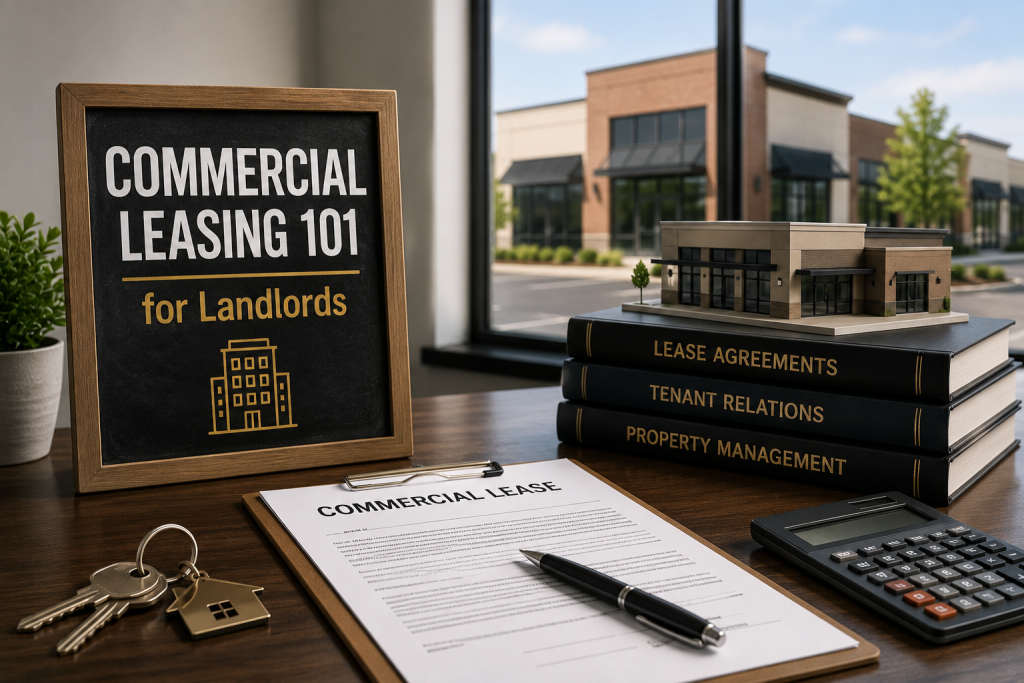
Commercial Leasing 101 for Landlords
Most Texas landowners don’t start out planning to become commercial landlords. They own land, someone approaches them about leasing it for a commercial purpose, and suddenly they’re in a negotiation they weren’t quite prepared for. This guide covers the basics that prepare you before that conversation happens — not after. Commercial land leasing is not the same as residential leasing, and it’s not the same as selling. It’s its own category with its own terminology, its own negotiating dynamics, and its own specific risks and benefits for the landowner. The Texas landowners who do this well are generally the ones who understood the framework before they started, not the ones who learned it by signing something they later wished they’d read more carefully.This guide covers the foundations of commercial land leasing in Texas — the lease structures you’re likely to encounter, the provisions that matter most for landlords, and the questions worth asking before you put your name on anything. The Ground Lease: The Core Commercial Land Product A ground lease is the specific instrument used when a landowner leases the bare land — not a building, not a developed property — to a tenant who then builds and operates on it. The tenant constructs improvements on land they don’t own, pays rent to the landowner for the ground beneath those improvements, and typically holds the improvements during the lease term. At the end of the lease, the improvements revert to the landowner (the terms of what happens to improvements at expiration are one of the most negotiated elements of any ground lease). Ground leases are common in commercial real estate contexts where the tenant is a national or regional operator — a fast food chain, a gas station, a bank branch, a retail operator — who wants a specific location but is willing to lease the land rather than purchase it outright. From the landowner’s perspective, the ground lease produces ongoing income without a sale, preserves the underlying ownership of the land, and eventually delivers improvements back to the landowner at lease expiration. The terms of ground leases are typically long — 25 to 99 years with renewal options — which is what makes them work financially for tenants who are building permanent improvements on leased ground. A tenant building a $2 million restaurant on leased land needs sufficient lease term to amortize that investment and justify the construction cost. The long term of ground leases is one of the elements landowners are sometimes surprised by when they first see the lease form. “A ground lease is a long-term relationship. The tenant is putting up buildings on your land, and the terms you agree to at the beginning govern that relationship for decades. Getting the terms right at the start matters in a way that a short-term agreement doesn’t.” Lease Structures: What You’re Agreeing To The commercial land lease in Texas can take several structural forms depending on what the tenant is doing and what the negotiating parties agree to. Understanding the structure determines which party bears which costs and risks. The Triple Net (NNN) Ground Lease The triple net structure — the most common form for national commercial tenants on ground leases — means the tenant pays the base rent plus all operating expenses: property taxes, insurance, and maintenance. For the landowner, this produces a truly passive income stream — the rent check arrives and nothing else is required. The trade-off is that the base rent in a triple net lease is typically lower than it would be in a gross lease because the tenant is already absorbing the operating costs. Understanding what “triple net” actually means (and confirming that the lease form actually achieves net treatment for all three categories — taxes, insurance, and maintenance) is the right starting point for evaluating any NNN ground lease proposal. The Gross Lease A gross lease — more common in shorter-term or smaller commercial lease contexts than in ground leases — has the landlord paying operating expenses from the rent received. The rent is higher than in a NNN structure because it’s covering those costs. For land leasing specifically, the gross structure is unusual — most serious commercial tenants want the NNN structure — but it appears in smaller or shorter-term land lease situations where the simplicity of a single rent payment serves both parties. Percentage Rent Some commercial leases — particularly in retail contexts — include a percentage rent component that pays the landlord a percentage of the tenant’s gross sales above a certain breakpoint in addition to the base rent. This structure gives the landlord participation in the tenant’s success. It’s more common in shopping center contexts than in standalone ground lease transactions, but it appears in ground leases with retail or hospitality operators where the landowner has negotiating leverage to demand upside participation. The Provisions That Matter Most for Landowners Within the ground lease document — which in a commercial transaction is typically prepared by the tenant’s attorney and runs 40 to 80 pages — the provisions that most directly affect the landowner’s position are the ones most worth understanding before signing. The Subordination, Non-Disturbance, and Attornment (SNDA) Clause If the tenant seeks financing secured by the leasehold interest — and most commercial ground tenants do — the lender will require a subordination agreement that puts the landowner’s fee interest behind the tenant’s leasehold mortgage in priority. This is standard in commercial ground leases but has real implications: if the tenant defaults on their construction loan, the lender can step into the tenant’s position. The SNDA negotiation is where landowners establish the protections they need in a lender-takeover scenario — specifically, that the lender must assume the lease obligations and honor the lease terms rather than simply terminating the lease and taking the land. Reversionary Rights and Improvements at Expiration What happens to the improvements the tenant built on your land when the lease expires? In most ground leases, the improvements revert to the landowner —