
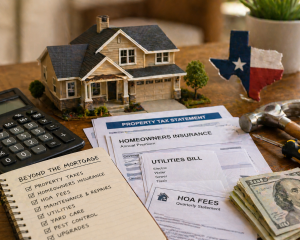
Buying a home feels like the big milestone.
You finally get the keys, maybe take that first walk through your space, and think—this is it.
But here’s the part that doesn’t always get talked about enough…
The mortgage is just the beginning.
If you’re planning to buy (or already own) in Texas, understanding the full cost of owning a home Texas style is what keeps you from getting blindsided later.
And no, it’s not about scaring you off. It’s about helping you plan smarter.
Let’s break it down in a way that actually feels real—not overly technical, just practical.
The Mortgage: Just One Piece of the Puzzle
Most people focus here first.
Your Monthly Mortgage Includes:
- Principal
- Interest
That’s the obvious part.
But what gets missed is everything layered on top of it.
Property Taxes in Texas (Yeah… They Add Up)
Texas doesn’t have a state income tax.
Sounds great, right?
The Trade-Off:
Property taxes tend to be higher than the national average.
What That Means for You:
- Monthly payments can be higher than expected
- Taxes can increase over time
This is one of the biggest property ownership expenses in the state.
Homeowners Insurance: Required (and Necessary)
If you have a mortgage, you’ll need insurance.
It Covers:
- Damage from storms
- Fire
- Certain types of liability
In Texas, weather plays a role—so coverage matters more than people sometimes expect.
Maintenance Costs: The Ongoing Reality
This is where things get real.
Homes need upkeep. Always.
Typical maintenance costs Texas homes owners deal with:
- HVAC servicing
- Roof repairs
- Plumbing fixes
- Appliance replacement
A Simple Rule:
Set aside about 1–3% of your home’s value per year for maintenance.
It’s not exact—but it’s a solid starting point.
Utilities: More Than You Might Expect
Utility costs vary depending on your home, but in Texas…
You’ll Likely Pay For:
- Electricity (big one, especially in summer)
- Water
- Trash services
- Internet
Hot weather means AC runs a lot.
So yeah… utilities Texas housing costs can sneak up on you if you’re not prepared.
HOA Fees (If Applicable)
Not every home has these—but many do.
HOA Fees May Cover:
- Landscaping
- Community maintenance
- Amenities
Monthly Cost:
Can range from minimal to several hundred dollars.
Always check this before buying.
Repairs vs Maintenance (They’re Not the Same)
People often lump these together.
Maintenance = Expected
- Filter changes
- Routine servicing
Repairs = Unexpected
- Broken water heater
- Electrical issues
- Roof damage
Both need to be part of your budgeting for homeownership.
Home Improvements (Optional… But Not Really)
At some point, you’ll want to upgrade something.
Common Upgrades:
- Flooring
- Kitchen updates
- Outdoor spaces
These aren’t required—but most homeowners end up doing them over time.
Property Insurance Add-Ons (Depending on Location)
Some homes need extra coverage.
Examples:
- Flood insurance
- Windstorm insurance
Not always required—but sometimes necessary.
Closing Costs (Before You Even Move In)
Let’s rewind for a second.
Before you own the home, there are upfront costs.
Closing Costs Can Include:
- Loan fees
- Title insurance
- Inspections
Usually around 2–5% of the purchase price.
The Cost of Time (Something People Forget)
Owning a home takes time.
You’ll Spend Time On:
- Maintenance
- Repairs
- Managing bills
It’s not just financial—it’s part of your lifestyle.
Unexpected Costs (Because They Happen)
No matter how prepared you are…
Something unexpected will come up.
Examples:
- Emergency repairs
- Storm damage
- Sudden appliance failure
This is why having a buffer matters.
How to Budget for Homeownership (Realistically)
Let’s make this practical.
A Simple Monthly Breakdown Might Include:
- Mortgage
- Taxes
- Insurance
- Utilities
- Maintenance savings
If you plan for all five, you’re in a much better position.
Why Working With the Right Team Matters
Understanding costs upfront is easier when you have guidance.
Working with experienced professionals like Airstream Realty can help you see the full picture—not just the listing price.
Considering Different Property Types
Not all properties come with the same costs.
For Example:
- Commercial properties may have different expenses
- Land ownership has fewer utilities but other considerations
Exploring options like commercial property investments can open up different financial paths.
Location Still Affects Cost
Even within Texas, costs vary.
Factors Include:
- Local tax rates
- Utility costs
- Maintenance needs
Areas like Midlothian land investments may offer different cost structures compared to urban markets.
The Long-Term View
Here’s the bigger picture.
Owning a home isn’t just about monthly payments—it’s about long-term value.
Over Time:
- Property can appreciate
- Equity builds
- Costs become more predictable
That’s the trade-off.
Common Mistakes New Homeowners Make
Let’s keep this honest.
Underestimating Maintenance
It’s not optional.
Ignoring Property Taxes
They can increase over time.
Not Having an Emergency Fund
This one matters more than people expect.
Focusing Only on the Mortgage
It’s just one part of the total cost.
A Simple Way to Think About It
Instead of asking:
“What’s my mortgage?”
Ask:
“What’s my total monthly cost of ownership?”
That shift changes everything.
FAQs: Cost of Owning a Home in Texas
What is the biggest hidden cost of homeownership?
Maintenance and property taxes are often underestimated.
How much should I budget for maintenance?
About 1–3% of your home’s value annually.
Are utilities expensive in Texas?
They can be, especially electricity during summer months.
Do property taxes increase over time?
Yes, depending on local assessments and market changes.
What’s included in closing costs?
Loan fees, title services, inspections, and more.
Is owning a home still worth it?
For many people, yes—but only with proper planning.
Final Thoughts
Owning a home in Texas comes with more than just a mortgage.
It’s taxes, maintenance, utilities, and the occasional surprise expense.
But it’s also stability. Ownership. Long-term value.
If you go into it with clear expectations—and a solid plan—you’re not just buying a house.
You’re building something that grows over time.
And honestly… that’s where the real value is.