
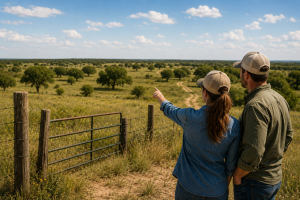
Buying rural land in Texas is one of those decisions that can go really well or really sideways — and the difference is almost always what happened before the contract was signed. The buyers who end up happy with their acreage are the ones who asked the right questions early. The ones who have regrets? Usually they got excited about the view and the price per acre and skipped the boring parts.
The boring parts matter a lot.
Texas is a big state with wildly different terrain, geology, water conditions, legal traditions, and land use patterns depending on where you are. What you need to verify before buying 50 acres in East Texas is genuinely different from what matters most on a Hill Country ranch or a South Plains farm. This guide covers the foundational due diligence that applies across the state, plus the specifics that catch buyers off guard most often.
Start With What You Actually Want the Land to Do
Before you start evaluating any specific property, you need a clear answer to a deceptively simple question: what is this land for? Recreational use — hunting, fishing, weekend getaways — has different requirements than agricultural production, which has different requirements than a buy-and-hold investment in a growth corridor, which is different again from residential development potential.
The checklist items that matter most shift depending on your intended use. A hunting property buyer cares deeply about wildlife habitat, water features, and timber cover. A row crop farmer is evaluating soil quality, drainage, and water access. A land investor is looking at proximity to growth, infrastructure trajectory, and comparable sales velocity. Getting clear on your purpose first means your due diligence is focused rather than scattered.
If you’re still figuring out what type of property fits your goals, browsing available Texas land listings across different regions and use types gives you a useful real-world picture of what’s out there and what different categories of land are actually trading for right now.
Water: The Single Most Important Factor in Texas Land
Ask any experienced Texas land buyer or broker what they check first, and water comes up every time. It’s not close. In a state where drought is a recurring reality and groundwater law is genuinely complex, understanding a property’s water situation before you buy is non-negotiable.
Surface Water vs. Groundwater
Texas separates surface water rights from groundwater rights, and both require separate investigation. Surface water — rivers, streams, ponds, lakes — is generally owned by the state of Texas, and landowners typically have usage rights that can vary by region and water district. Groundwater, on the other hand, falls under the “rule of capture” in Texas, meaning the landowner generally has the right to pump what’s beneath their property, subject to applicable groundwater conservation district rules.
If the property has a stock tank, a creek, or a river running through it, verify what rights come with the land versus what the seller actually owns. Surface water features can be beautiful and useful, but assuming you have unlimited access to a creek that runs along your boundary line is an assumption that’s caused a lot of expensive arguments.
Well Water Depth and Reliability
For properties without municipal water service — which is most rural Texas acreage — well quality is critical. Find out the depth of any existing well, the gallons-per-minute yield, water quality test results, and when the well was last tested or serviced. If there’s no existing well, get an estimate from a local driller on what depth typically produces in that area and what it would cost. In some parts of West Texas, drilling a productive well is a significant expense that should factor into your offer.
Mineral Rights: Don’t Skip This Conversation
Texas has a long history of separating surface rights from mineral rights, and a surprising number of buyers close on rural acreage without fully understanding what’s happening below the surface. Mineral rights — oil, gas, coal, uranium — can be severed from surface ownership and retained by a previous owner or sold separately. It’s entirely possible to buy land in Texas and own the surface completely while a third party owns everything beneath it.
This matters for a few reasons. First, if minerals are leased, an operator can have the legal right to access your surface to conduct drilling or extraction operations, with your ability to object being limited. Second, retaining mineral rights has real value in producing areas, so buying land with full mineral ownership is generally worth more than buying the surface alone. Third, even in areas without active production, the title history of mineral ownership can affect future value and financing.
Pull a mineral ownership report. Understand what fraction of the minerals, if any, convey with the property. And in active oil and gas counties — Permian Basin, Eagle Ford, etc. — treat this with the same seriousness as the surface title review.
Access, Roads, and Easements
Landlocked parcels exist in Texas. More than most people realize, actually. Before falling in love with a property, confirm that it has legal access to a public road — not just a handshake agreement with a neighbor, and not just a path that happens to cross someone else’s property. Legal access via a recorded easement or direct frontage on a county or state road is what you need.
Beyond access, review all recorded easements on the property. Pipeline easements are extremely common on rural Texas land, and while they don’t necessarily reduce a property’s value significantly, you need to understand what the easement holder’s rights are, what restrictions exist on land use within the easement corridor, and whether any pipelines are active. Power line easements, water line easements, and road easements all carry their own sets of rights and restrictions that affect how you can use the land.
Get a title commitment early in the process and read the Schedule B exceptions carefully. That’s where the easements, restrictions, and title encumbrances show up — and there are sometimes surprises.
Soil, Drainage, and Land Condition
For buyers evaluating farmland in Texas, soil quality and drainage are fundamental. The Web Soil Survey tool from the USDA provides free, fairly detailed soil classification data that tells you what you’re working with before you ever walk a property. Understanding whether you’re buying Class I cropland or more marginal Class IV soils changes the calculus on agricultural productivity and, by extension, on price.
Drainage matters for nearly any rural use. Wet, poorly drained soil creates problems for buildings, roads, and septic systems. It limits the planting seasons for row crops. It can render portions of a property genuinely unusable for extended periods after heavy rain. Texas FEMA flood maps are a starting point, but walking the property after a rain event — or talking to neighbors who’ve watched it for years — gives you real-world drainage intelligence that a map can’t.
For agricultural parcels specifically, evaluating Texas farmland and agricultural acreage involves a specific set of considerations around soil classification, water availability, and agricultural exemption status that go beyond the general land purchase checklist.
Agricultural Exemptions and Property Tax Implications
Texas property taxes are high by national standards — genuinely high. The agricultural exemption (technically a productivity valuation) is one of the primary tools rural landowners use to manage their tax burden. Under ag exemption, land is taxed on its productive agricultural value rather than its market value, which can reduce annual taxes dramatically — sometimes by 90% or more on larger parcels.
If the property you’re buying currently has an ag exemption, understand the requirements for maintaining it. You’ll need to continue an agricultural use — grazing, hay production, timber management, wildlife management, etc. — and the county appraisal district will periodically verify that the use is genuine. Letting an ag exemption lapse triggers rollback taxes, which can be a significant unexpected bill covering the prior five years of tax difference plus interest.
Verify current exemption status. Understand what you need to do to maintain it. And if the property doesn’t have one but qualifies, applying for ag exemption shortly after purchase is one of the more impactful first steps a new rural landowner can take.
Zoning, Deed Restrictions, and Permitted Uses
Most truly rural Texas land exists outside incorporated city limits and isn’t subject to municipal zoning. That’s part of the appeal for many buyers — the freedom to use land without a city government telling you what you can and can’t build. But the absence of zoning doesn’t mean the absence of restrictions.
Deed restrictions imposed by previous developers or sellers can significantly limit what you’re able to do with a property — even decades after they were originally recorded. Subdivision restrictions, agricultural-use covenants, and building setback requirements in deed language are all things that title review should catch, but buyers need to actually read those documents rather than just acknowledge their existence.
County regulations also vary significantly. Some Texas counties have adopted land use rules, floodplain regulations, or road standards that affect rural development even outside city limits. A quick call to the county judge’s office or local planning department can clarify what restrictions, if any, apply to the specific property you’re considering.
Working With Brokers Who Know the Territory
The checklist above is a framework, but context matters enormously in Texas rural land. What’s standard in one region is unusual in another. Water table depths, mineral rights activity, soil classifications, flood exposure, and growth trajectory all vary by county and sometimes by neighborhood within a county.
Working with a broker who has genuine regional knowledge — not just access to the MLS but actual familiarity with how land trades and what buyers find after closing in a specific area — is genuinely worth it. A good land broker identifies issues before they become problems and finds properties that match a buyer’s actual goals rather than just their stated budget.
If you’re exploring off-market opportunities, which is where some of the most interesting Texas rural acreage surfaces, off-market land listings in Texas represent inventory that bypasses the competition of publicly listed properties entirely.
For buyers with broader property goals — perhaps pairing a rural land purchase with a commercial or income-producing component — it’s worth knowing what other asset types look like in the same regional markets. A property like the Columbia Lakes portfolio hotel in West Columbia, TX illustrates the kind of larger mixed-use and commercial opportunities that sometimes sit alongside rural land in Texas growth regions — worth understanding even if your primary focus is acreage.
The Texas land market rewards preparation. Buyers who arrive at the closing table having done thorough due diligence almost always feel good about what they bought. Those who shortcut the process occasionally get lucky — but more often they discover what they missed, and that discovery rarely comes at a convenient time.
Airstream Realty works with buyers across the full range of Texas rural, agricultural, residential, and commercial property — with the kind of regional depth that makes a real difference when the details matter. If you’re in the early stages of a rural land search, starting with a conversation about what you’re looking for and what the market actually looks like right now is time well spent.
Frequently Asked Questions
What should I check before buying rural land in Texas?
The core due diligence items are water rights and well quality, mineral rights ownership, legal access to a public road, recorded easements, soil and drainage conditions, agricultural exemption status, and any deed restrictions. Title review should be thorough, not cursory. Each of these areas can reveal issues that affect both the usability and the long-term value of the property — skipping any of them is a risk that experienced buyers don’t take.
How do mineral rights work when buying land in Texas?
In Texas, mineral rights can be severed from surface rights and owned separately. When you buy rural land, you may be purchasing only the surface while a previous owner or third party retains the mineral estate beneath it. This means the mineral rights holder may have the legal ability to access your surface for extraction purposes, depending on lease terms and applicable law. Always verify what fraction of the minerals, if any, convey with the sale, and get a mineral ownership report as part of your due diligence.
What is an agricultural exemption in Texas and how does it affect land purchases?
The Texas agricultural exemption — formally a productivity valuation — taxes land based on its agricultural productive value rather than its market value. This can reduce annual property taxes significantly, sometimes by 90% or more on larger rural parcels. To maintain the exemption, the land must be used for a qualifying agricultural purpose such as livestock grazing, hay production, timber management, or wildlife management. If you let an exemption lapse, rollback taxes covering the prior five years of tax difference plus interest become due. Verifying exemption status and understanding the maintenance requirements is an important step before closing.
Can you buy rural land in Texas without access to a public road?
You can, but you shouldn’t — not without resolving access first. Landlocked parcels exist in Texas, and buying one without a recorded easement guaranteeing legal access is a significant mistake. Some buyers have relied on informal neighbor agreements for access, only to find those arrangements fall apart when the neighbor sells or has a dispute. Legal access via a recorded easement or direct frontage on a county or state road should be confirmed in the title commitment before closing.
How important is water availability when buying rural Texas land?
It’s the single most important factor for most rural land uses in Texas. Surface water rights, groundwater access, well depth and yield, and proximity to water district service all affect usability and value in significant ways. Texas operates under complex water law with separate frameworks for surface water and groundwater, and what’s available on a property isn’t always what a listing describes. Getting an independent water assessment and understanding the applicable groundwater conservation district rules for the county is essential before purchasing any rural acreage.
What are common red flags when evaluating rural land in Texas?
Several: no legal recorded access to a public road; fully severed mineral rights with an active lease in place; poor drainage or significant FEMA flood zone coverage; a well with very low yield or failed water quality tests; deed restrictions that conflict with intended use; expired or at-risk agricultural exemptions; and easements — particularly wide pipeline easements — that cut through the most usable portions of the property. None of these are automatically deal-breakers, but each requires careful evaluation of what it means for your specific intended use and your ability to finance or eventually resell.
Is buying off-market land in Texas a good strategy?
For buyers serious about finding quality rural acreage in competitive markets, off-market properties are worth pursuing actively. A meaningful share of attractive Texas rural land — particularly larger agricultural and transitional parcels — changes hands through broker relationships and private conversations before it’s ever publicly listed. Off-market deals often involve motivated sellers, less competitive bidding, and more flexibility on terms. The primary requirement is working with brokers who have genuine regional relationships and consistent access to inventory that doesn’t appear on public listing platforms.